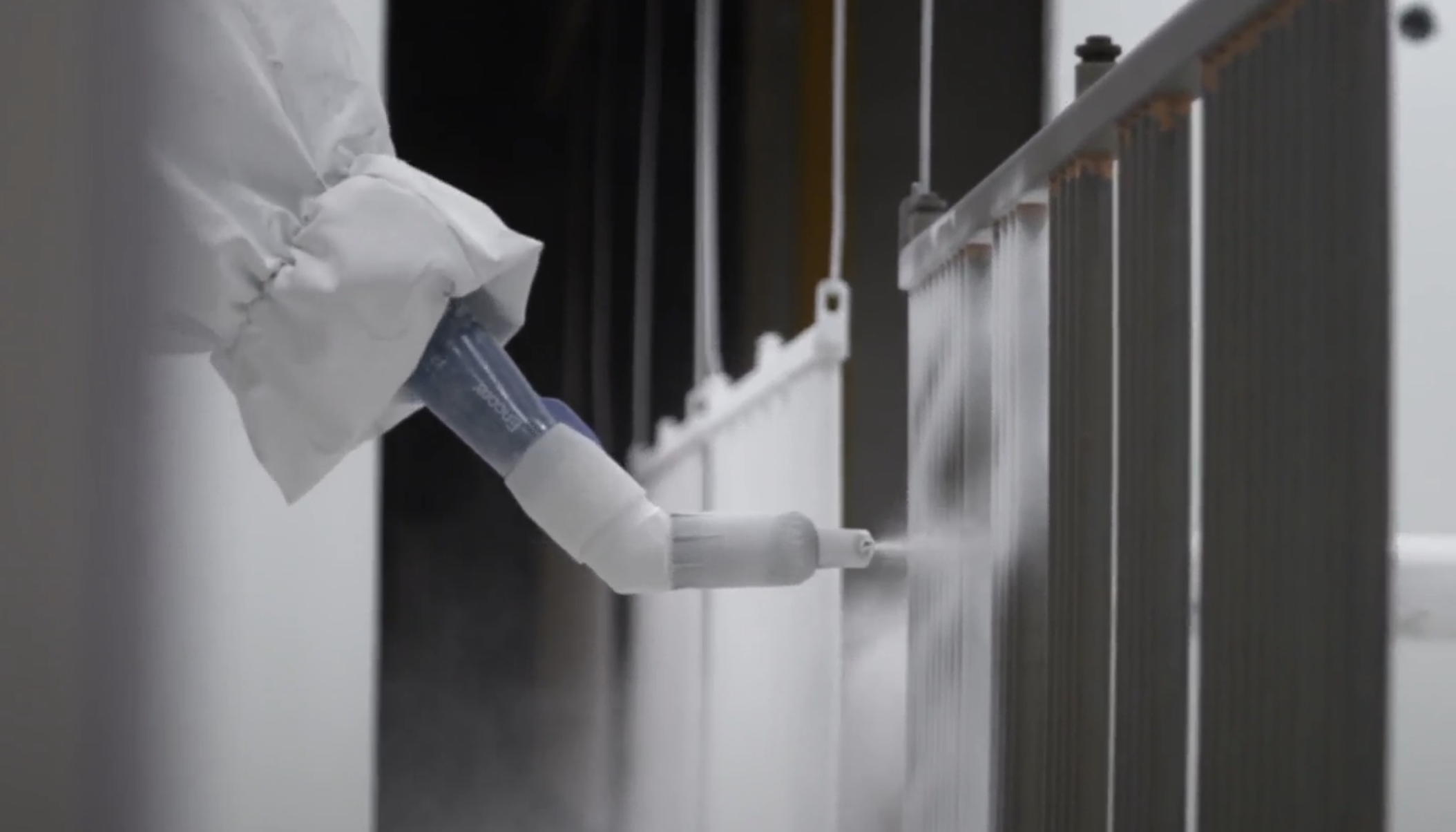






Polysan is a Czech manufacturing company active on the market since 1996. The company produces bathroom equipment, including acrylic bathtubs, shower trays, glass shower enclosures and bath screens. In its production, Polysan uses a FANUC robot to spray bathtubs with a mixture of resin, and glass fibre.
The Bottleneck
Eliminating the robot programming bottleneck
When the company lost its robot programmer and could not find the specific knowledge of fiber glass spraying with robot programming on top, it needed a practical alternative. New bathtub types still had to be introduced into production, and each one required a reliable robot programs for spraying. The goal was clear: give the production team a way to create robot trajectories independently, without depending on specialized robot programming for every new product.
- New bathtub types needed new robot programs
Polysan needed to create several new programs for new bathtub types. With the previous approach, programming 1 new bathtub could take around 4 weeks. That created a serious limitation for production flexibility, especially when new variants had to be prepared for serial manufacturing. - Robot programming knowledge was difficult to replace
The challenge was not only the programming time itself. Polysan had lost the person responsible for robot programming and could not easily replace that expertise. For a manufacturing company, this meant that one missing skill could directly affect the ability to launch new products on the robotic spraying cell. - The 7th axis added another layer of complexity
The bathtub is placed on a rotating table (FANUC servo positioner), which acts as a 7th axis. For the spraying process to work correctly, the robot path and table rotation must be coordinated. It assures the reachability of the robot to all positions in order to apply material evenly into all edges.
The Solution
When production experts become robot teachers
- A practical workflow for production
The process is straightforward. The operator marks points on the bathtub, demonstrates the trajectory with RoboTeach, generates the program, uploads it to the robot, runs a test, sprays the part and performs quality control. This gives Polysan a repeatable method for creating new programs internally. Instead of waiting for specialized programming work, the team can prepare and test new trajectories as part of its own production workflow.
- Operator-led teaching with RoboTeach
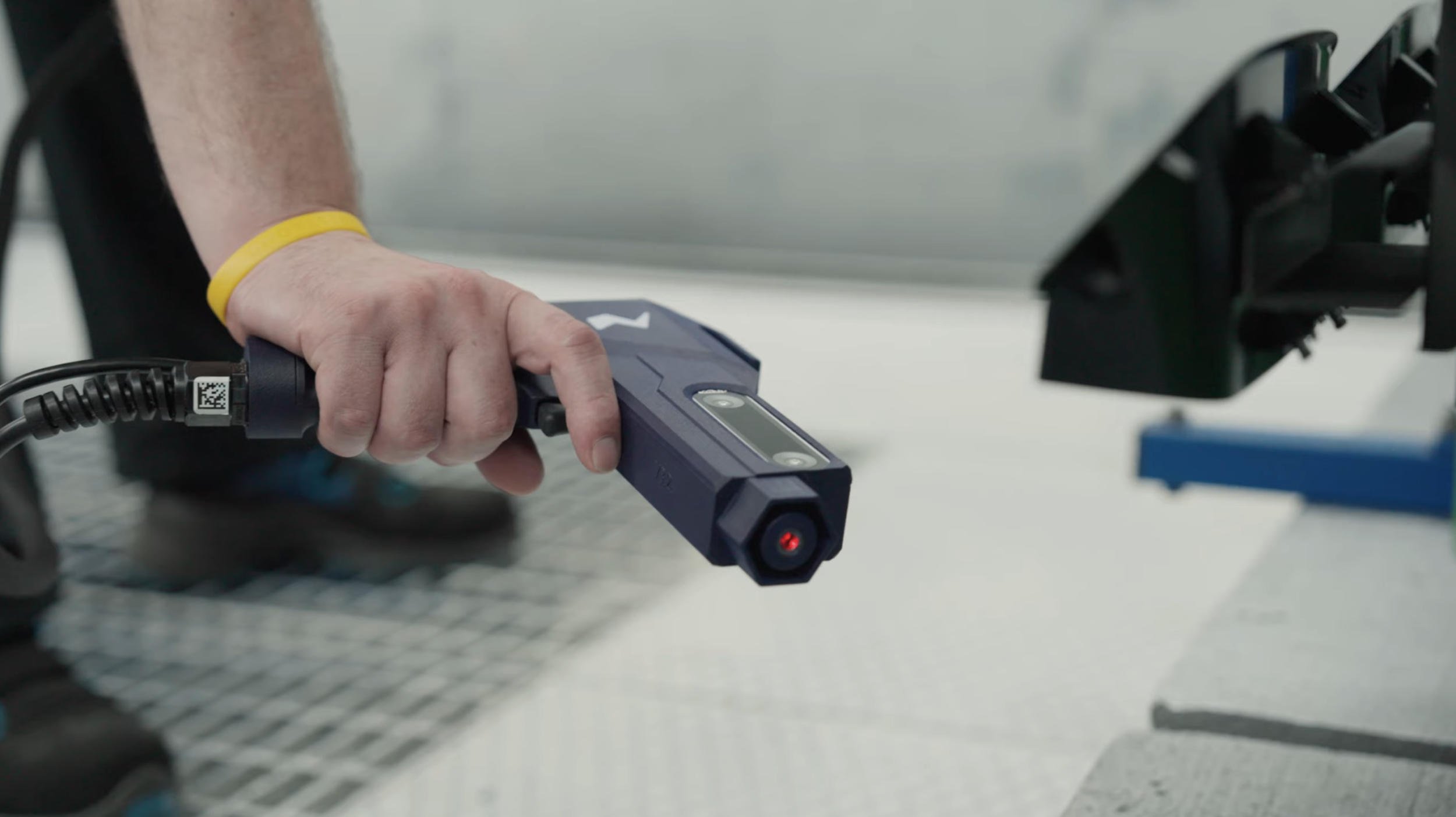
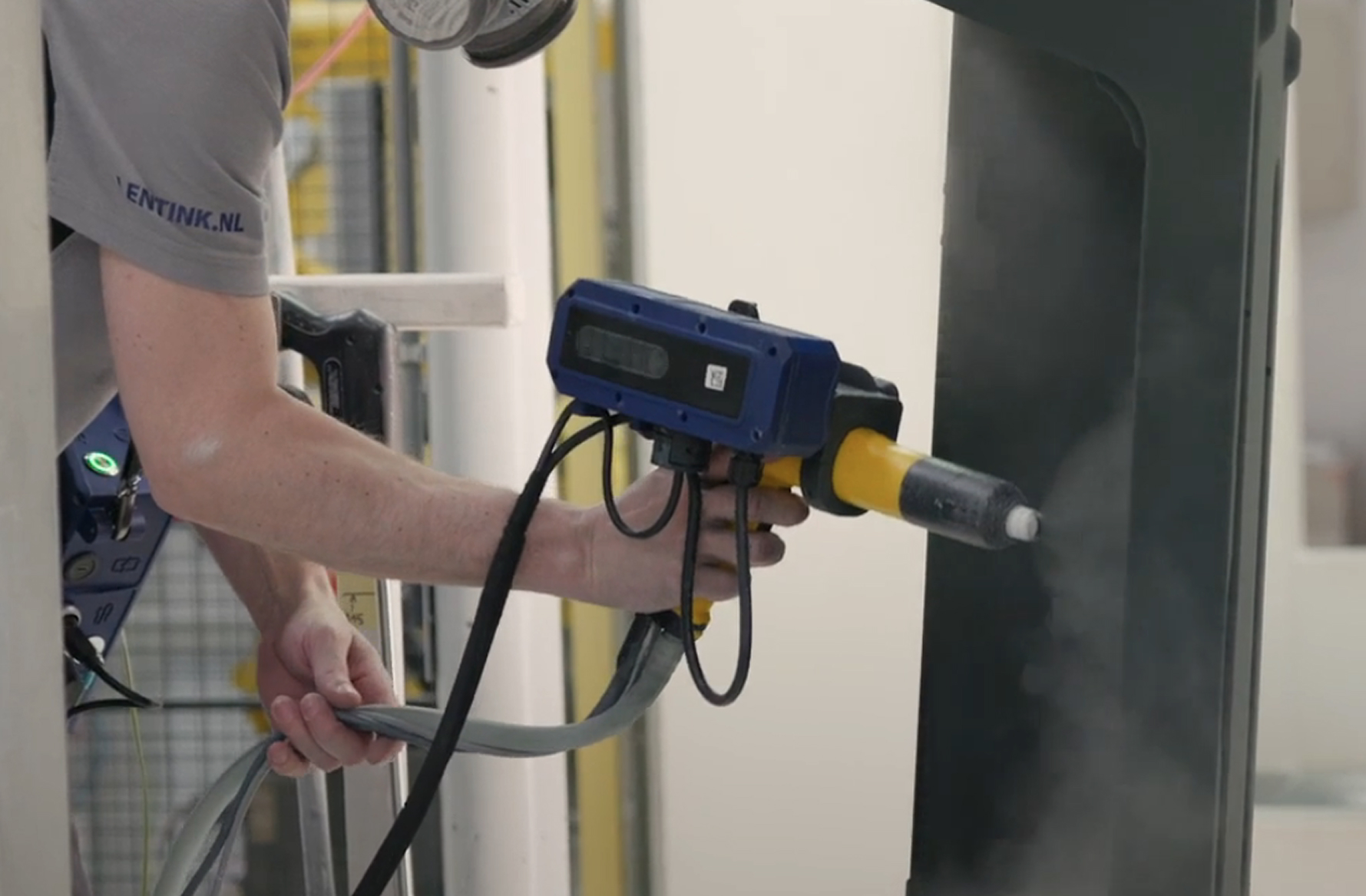
With RoboTeach, the operator teaches the bathtub statically. Instead of writing the robot program point by point, the operator physically demonstrates the required trajectories directly on the product. For one bathtub, the process is divided into three recordings: the bottom, the sides and the rim. This approach fits naturally with the knowledge already present in production. The person who understands how the glass fibre and resin mixture should be applied can show the movement directly. RoboTeach then captures the trajectory and supports the creation of the robot program.
- Instructions generated for the FANUC servo positioner
For Polysan, RoboTwin integrated the teaching workflow with automatic robotic instructions of the 7th-axis movement. After the operator records the trajectory on the stationary bathtub, the necessary table rotation angles are calculated in post-processing. This helps keep the spraying position consistent relative to the rotating table and ensures that the taught robot positions remain reachable. The result is a workflow where the operator can focus on the spraying path, while the software handles the additional axis coordination. - Support and training for independent use
RoboTwin also provided intensive support and trained the Polysan team to work with RoboGuide, the FANUC robot simulation and programming software. The training took two days, after which the team was able to create programs independently. When the user encountered challenges with operating the robot, RoboTwin stepped in and kindly helped.
The result
80% less programming time, 60% more robot utilization
- From weeks to days, later to hours
Previously, creating a program for one new bathtub could take around 4 weeks. After our training with RoboTeach, they were able to finish first programs in 3 days. After 2 months of use, Polysan can now design, upload, test and finish a production program within three hours and is able to save around 80% of original programming time. - Higher utilization of the existing robot by 60%
During the first month of using the solution, Polysan created three programs that are now used in serial production. Because Polysan can create programs faster and more effectively, the utilization of its robot increased by 60%. For a manufacturer that already has robotic equipment installed, this is a practical benefit: the value comes not from adding another robot, but from making the existing one easier to adapt to new products. - A reusable technology for other 7th-axis application
The automatic 7th-axis control developed for Polysan can now also be offered to other customers. For manufacturers using rotating tables or similar auxiliary axes, this creates a more accessible way to teach complex robot paths without turning every product change into a specialised programming task.