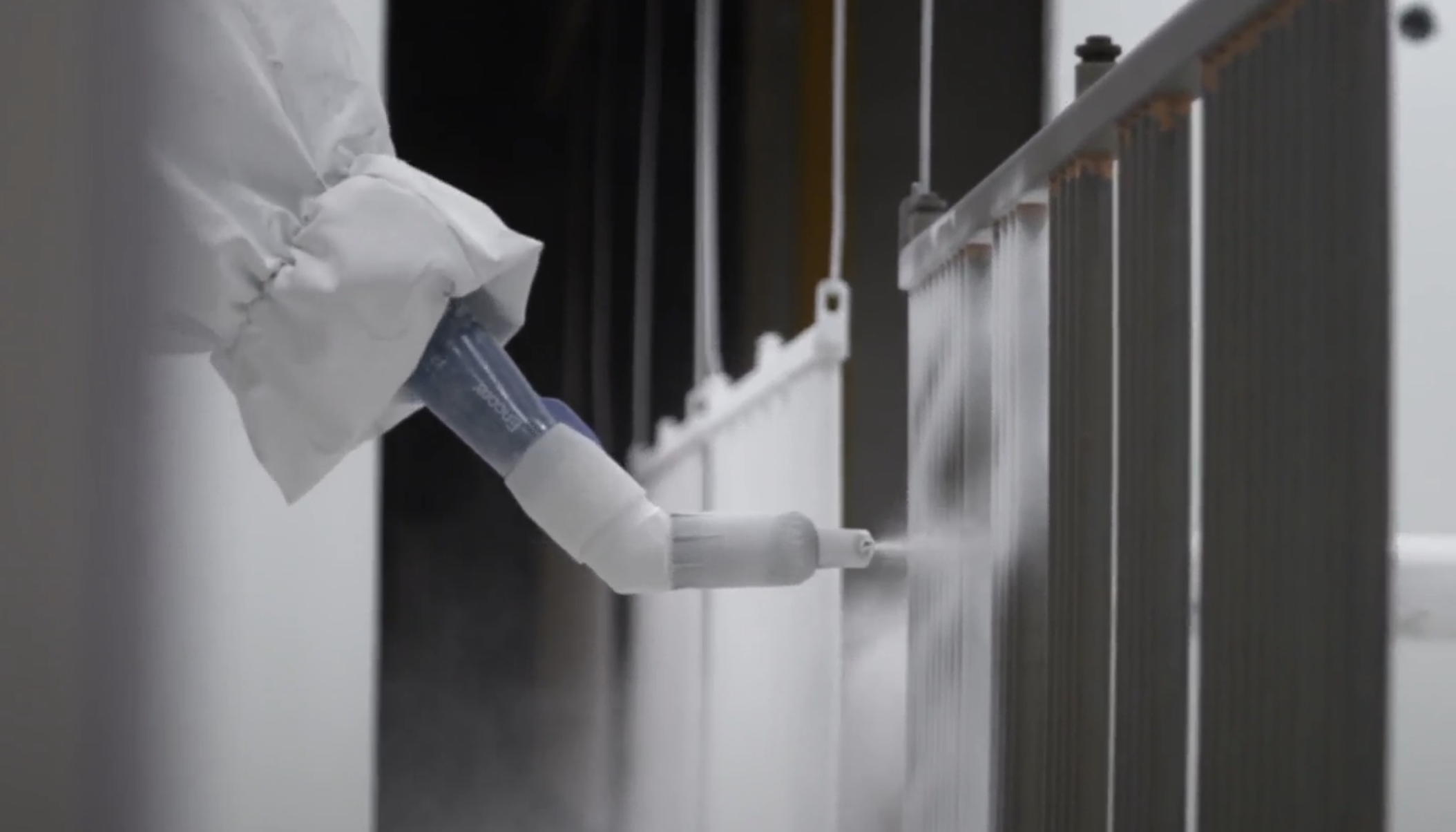




The Institute of Plasma Physics of the Czech Academy of Sciences (IPP CAS) leads advanced research in thermonuclear fusion and plasma technologies. They utilize specialized ABB robots to execute highly repeatable plasma spraying. It is a technique that melts and accelerates material to form protective coatings on complex structures layer by layer.
The Bottleneck
The complexity of multi-phase thermal trajectories
Plasma spraying is a highly sophisticated process requiring 3 distinct phases: preheating, spraying, and cooling. Manually programming an ABB robot for these intricate, heat-sensitive tasks creates a severe operational challenge.
- Impractical trajectory plotting
Manually programming the complex, multi-layered paths required for both the plasma torch and the integrated cooling takes an excessive amount of time, stalling critical output. - Constant TCP variations
Because every product and ceramic powder has unique thermal properties, researchers are forced to constantly recalculate and reprogram entirely new Tool Center Points (TCPs) and spraying distances. - Restrictive project scope
The sheer time and technical difficulty required to program sophisticated paths force the laboratory to decline custom or unconventional coating projects.
The Solution
Mastering multi-phase thermal trajectories without the programming
- Recording paths in minutes
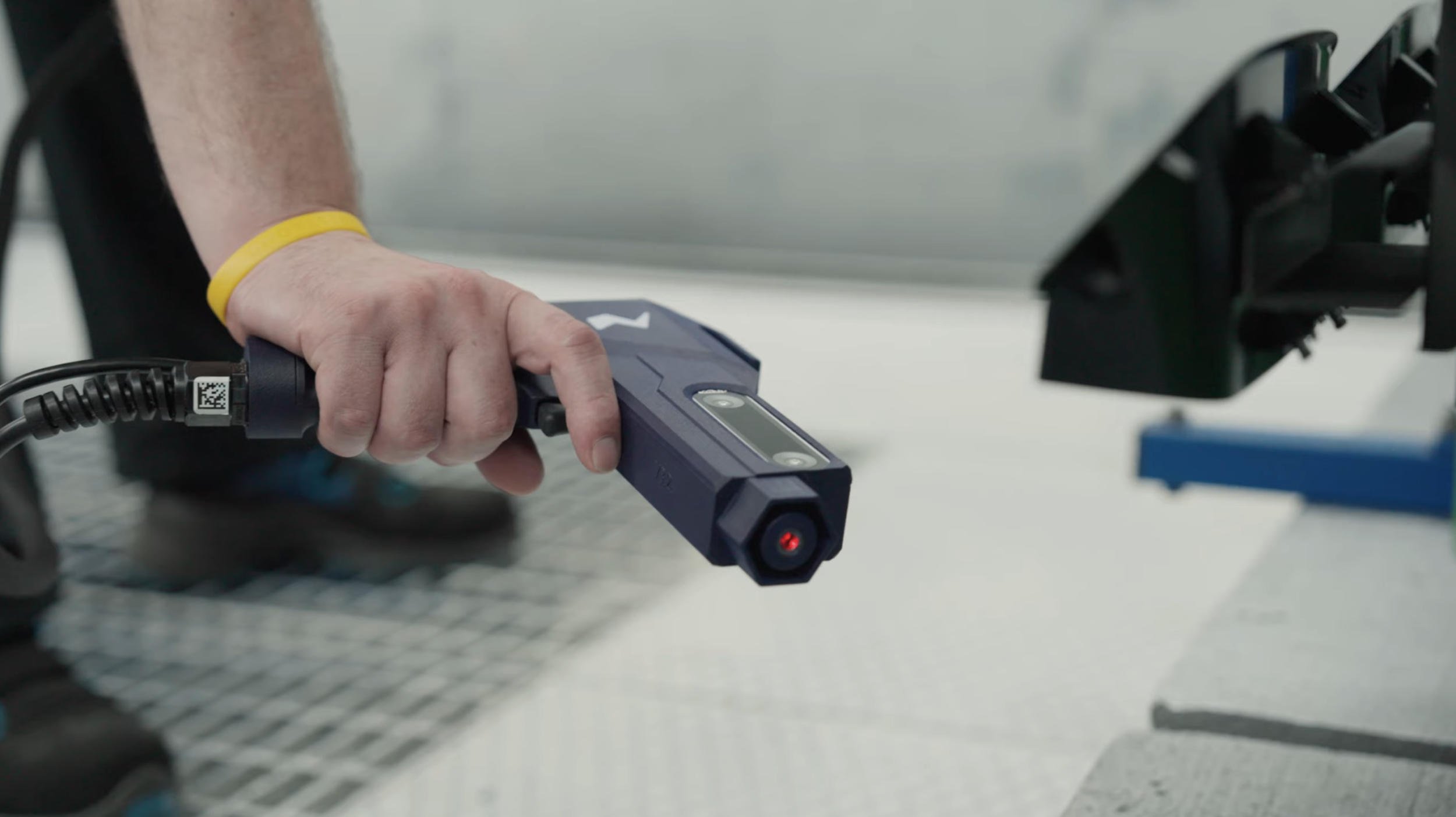
With RoboTeach, researchers simply demonstrate the spraying and cooling motions by hand, translating complex protective coating trajectories into usable robot program almost instantly.
- Agile multi-TCP generation
The system effortlessly handles automated robot programming for a wide range of differently positioned Tool Center Points, allowing the team to adapt to any product or material property on the fly.
- Expanding operational bandwidth
By completely eliminating the programming bottleneck, IPP CAS can now easily take on highly sophisticated, custom projects that were previously considered too time prohibitive.
- Native ABB integration
The recorded paths are converted directly into ABB robot modules via the RoboTwinApp. Researchers can use them immediately or tweak them within the Teach Pendant and ABB RobotStudio, keeping their standard workflow intact.