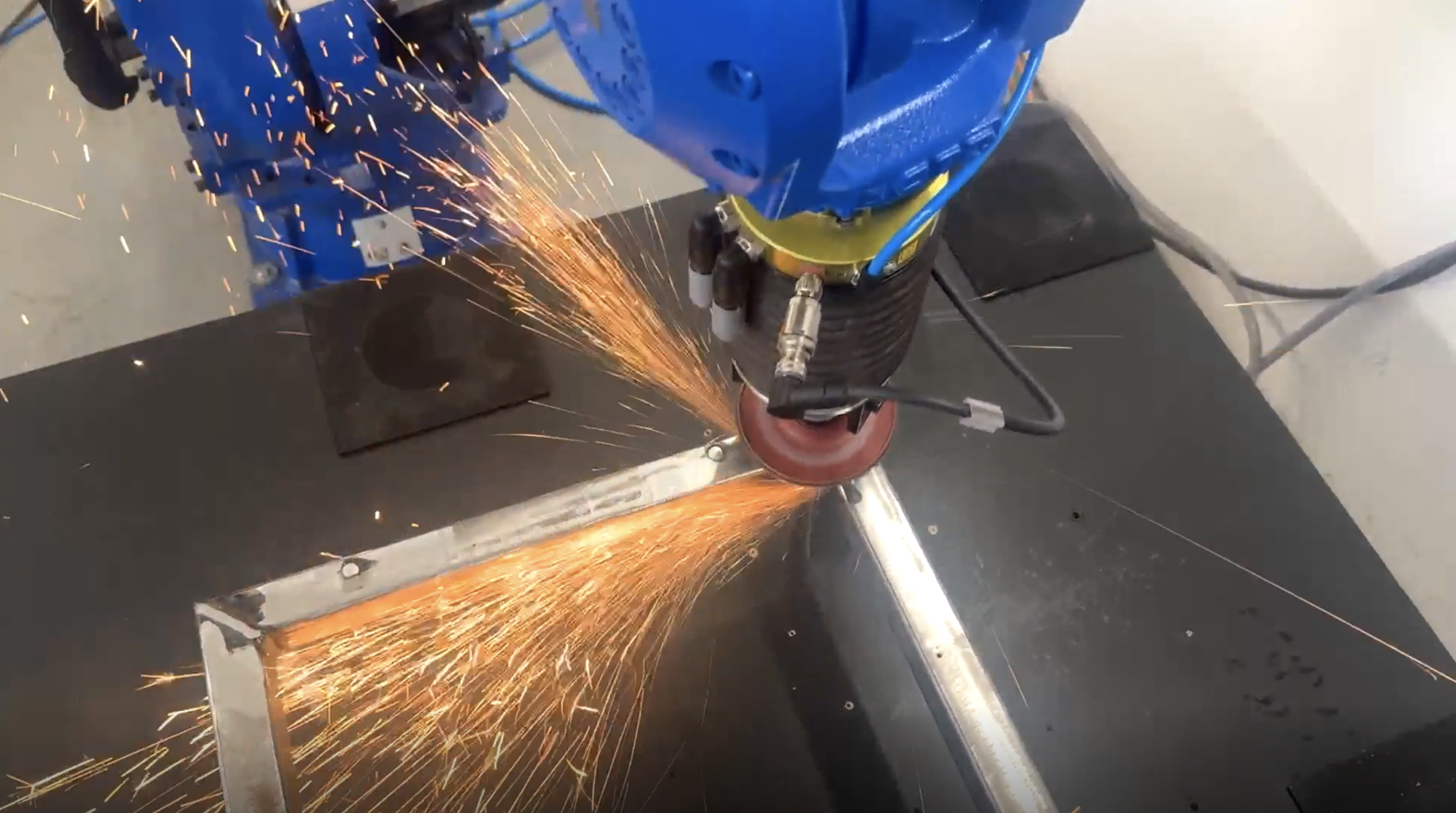
KESAT, an industrial automation engineering company based in the Czech Republic, has been building custom robotic workplaces since 1991. They specialize in supplying advanced robotic cells for grinding, sanding, and polishing to manufacturers across the EU. By integrating robotic grinding automation, they help their clients achieve consistent surface quality while lowering overall operating costs.
The Bottleneck
The abrasive challenge with frequent reprogramming
Surface finishing relies on a craftsman’s intuitive pressure. For KESAT’s clients, translating that human touch into rigid robot program was incredibly difficult creating an operational roadblock on the factory floor.
- Complex cell deployment
Advanced surface finishing requires fluid, exact movements. Manually plotting the intricate trajectories using a traditional teach pendant can be very slow. - The high-mix penalty
KESAT’s customers deal with constant product variations. When a factory floor requires frequent changeovers, the time spent on manual programming often outweighs the financial benefits of the automation itself. - Expensive overheads
Relying on external programmers for every single product variation drives up daily operating costs and destroys the ROI of the robotic cell.
The Solution
Empowering integrators with agile robot teaching
- Brand agnostic upgrades
KESAT seamlessly integrates RoboTwin’s technology directly into their robotic grinding automation cells, instantly unlocking advanced motion-tracking capabilities for major OEMs like YASKAWA and ABB.
- Rapid trajectory generation
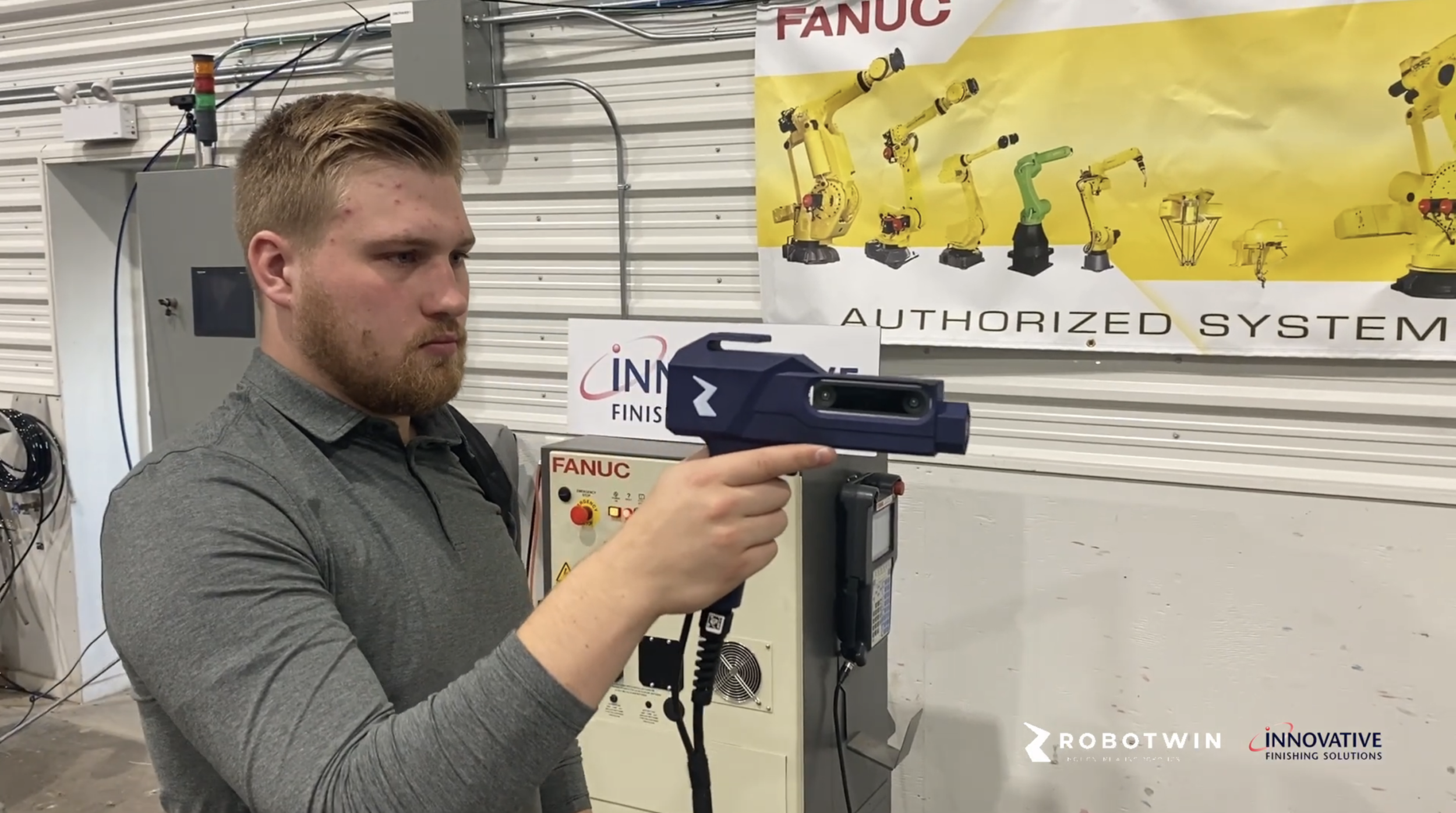
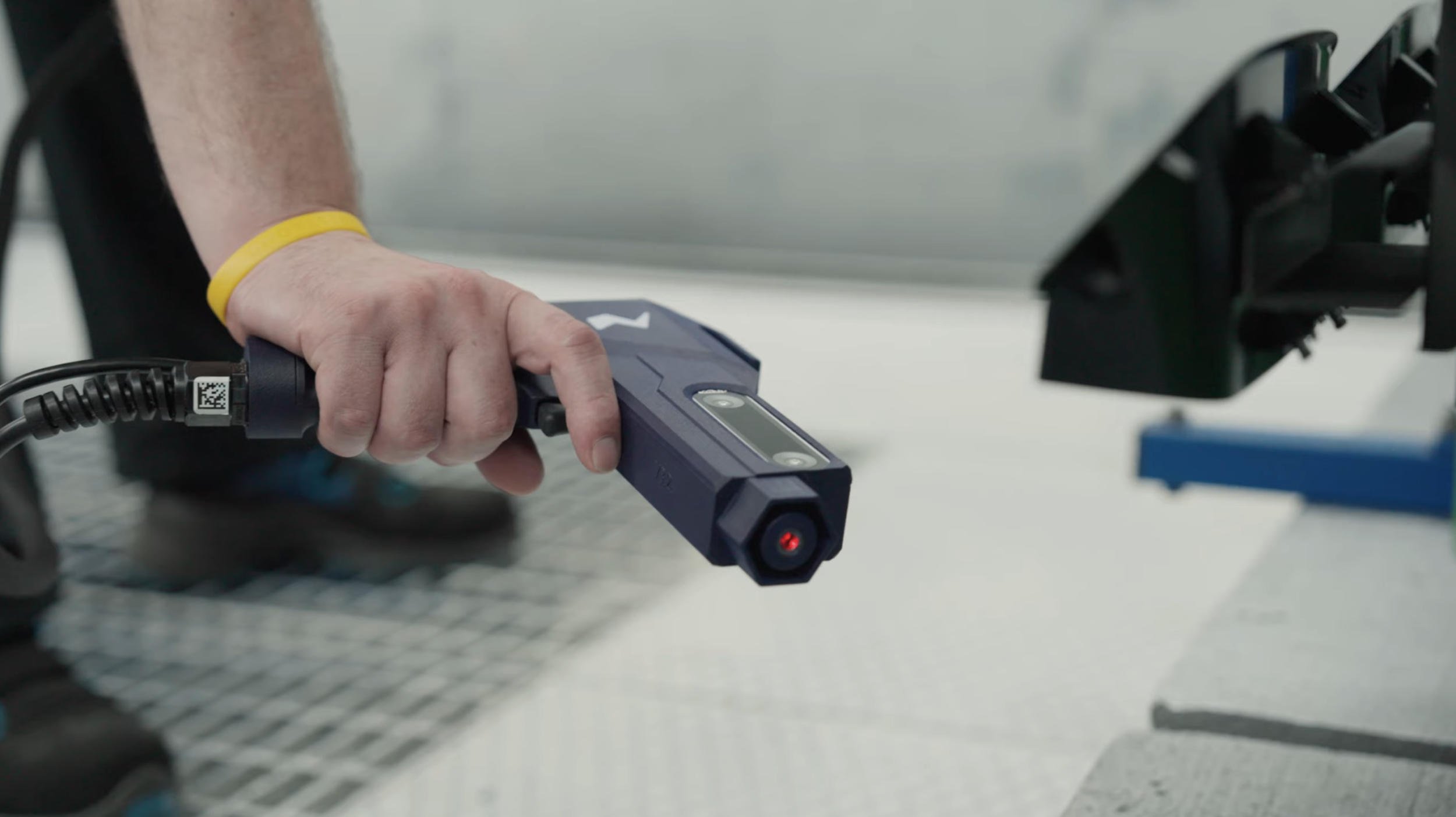
By equipping their setups with the specialized RoboTeach for grinding tool, KESAT allows their end-users to bypass slow programming by teach pendant entirely.
- Translating craft into code
KESAT’s clients do not need to hire more robot programmers. Their experienced polishers and grinders physically guide the tool, and our software instantly translates their movements into robot programs.
- Agile multi-tasking
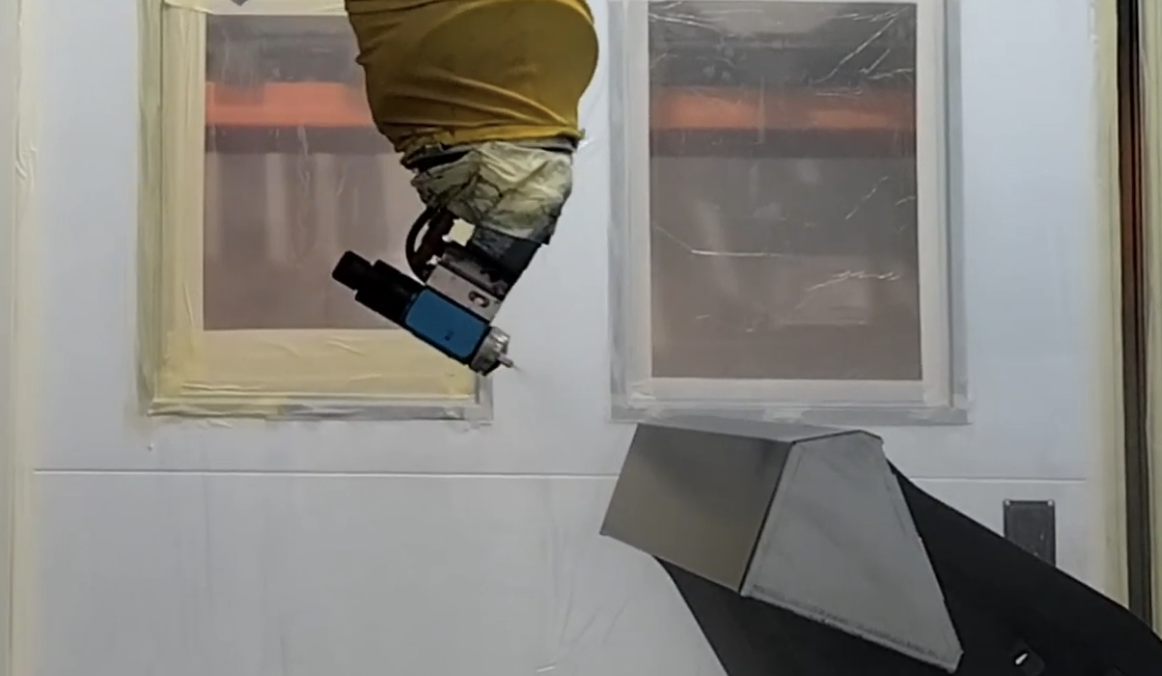
The standalone system empowers existing workforce to adapt to frequent production changes on the fly. They can easily teach the robot a wide variety of tasks, including grinding, sanding, wire wheel polishing, and even robotic taping.